

What are the cost - effectiveness analysis methods for energy storage battery projects?
Jan 21, 2026
As a supplier of energy storage batteries, I am often asked about the cost - effectiveness analysis methods for energy storage battery projects. Cost - effectiveness analysis is crucial for both us as suppliers and our customers, as it helps in making informed decisions regarding the investment in our products. In this blog, I will delve into some of the major cost - effectiveness analysis methods used in energy storage battery projects.
Net Present Value (NPV)
The Net Present Value method is one of the most widely used techniques in cost - effectiveness analysis. It takes into account the time value of money, which means that a dollar received in the future is worth less than a dollar received today. To calculate the NPV of an energy storage battery project, we first estimate all the cash inflows and outflows associated with the project over its lifetime.
Cash inflows can include revenue from selling stored energy back to the grid during peak hours, savings from avoiding high - cost electricity purchases during peak demand, and any government incentives or subsidies. On the other hand, cash outflows consist of the initial purchase cost of the energy storage battery, installation costs, maintenance costs over the project's lifetime, and replacement costs if applicable.
The formula for NPV is:
[NPV=\sum_{t = 0}^{n}\frac{CF_{t}}{(1 + r)^{t}}]
where (CF_{t}) is the cash flow in period (t), (r) is the discount rate, and (n) is the number of periods in the project's lifetime.
A positive NPV indicates that the project is expected to generate more value than it costs, making it a potentially profitable investment. For example, if a customer is considering installing a Lithium Battery For Camper for off - grid camping, they can calculate the NPV by estimating the savings in fuel costs for a generator (cash inflow) and subtracting the cost of the battery and its installation (cash outflow). If the NPV is positive, it means that the investment in the lithium battery is likely to be cost - effective in the long run.
Payback Period
The payback period is a simple yet intuitive method for assessing the cost - effectiveness of an energy storage battery project. It measures the time required for the cumulative cash inflows from the project to equal the initial investment. In other words, it shows how long it takes to “get back” the money spent on the project.
To calculate the payback period, we add up the annual cash inflows until the sum equals the initial investment. For instance, if an RV owner invests in a Battery Backup For RV that costs $2000 and saves them $500 per year in electricity costs from campsite hook - ups, the payback period is (2000\div500 = 4) years.
A shorter payback period is generally preferred as it indicates a quicker return on investment. However, the payback period method does not take into account the cash flows that occur after the payback period, nor does it consider the time value of money. So, while it provides a quick snapshot of how soon the investment can be recovered, it should be used in conjunction with other methods for a more comprehensive cost - effectiveness analysis.
Levelized Cost of Storage (LCOS)
The Levelized Cost of Storage is a comprehensive metric that reflects the average cost per unit of energy stored and discharged over the entire lifetime of the energy storage system. It includes all the costs associated with the project, such as capital costs, operation and maintenance costs, and replacement costs, and spreads them out over the total amount of energy that the system is expected to deliver.
The formula for LCOS is:
[LCOS=\frac{\sum_{t = 0}^{n}\frac{CC_{t}+ OMC_{t}}{(1 + r)^{t}}}{\sum_{t = 0}^{n}\frac{E_{t}}{(1 + r)^{t}}}]
where (CC_{t}) is the capital cost in period (t), (OMC_{t}) is the operation and maintenance cost in period (t), (E_{t}) is the energy delivered in period (t), and (r) is the discount rate.
LCOS is a useful metric for comparing different energy storage technologies or different projects. For example, when comparing a traditional lead - acid battery with a Lithium Ferro Phosphate Battery, the LCOS can help determine which option is more cost - effective in the long run. A lower LCOS indicates that the energy storage system can provide energy at a lower cost over its lifetime.
Benefit - Cost Ratio (BCR)
The Benefit - Cost Ratio is another important method for evaluating the cost - effectiveness of energy storage battery projects. It is calculated by dividing the present value of all the benefits of the project by the present value of all the costs.
The formula for BCR is:
[BCR=\frac{\sum_{t = 0}^{n}\frac{Benefits_{t}}{(1 + r)^{t}}}{\sum_{t = 0}^{n}\frac{Costs_{t}}{(1 + r)^{t}}}]
A BCR greater than 1 indicates that the benefits of the project outweigh the costs, making it a favorable investment. For example, if a commercial building installs an energy storage system to take advantage of peak - shaving (selling electricity back to the grid during peak hours), they can calculate the BCR by estimating the present value of the revenue from peak - shaving (benefits) and dividing it by the present value of the cost of the battery system, installation, and maintenance (costs).
Sensitivity Analysis
In addition to the above - mentioned quantitative methods, sensitivity analysis is also an essential part of cost - effectiveness analysis for energy storage battery projects. Energy storage projects are subject to various uncertainties, such as changes in electricity prices, battery performance degradation rates, and government policies.
Sensitivity analysis involves changing one or more input variables (such as the discount rate, electricity price, or battery efficiency) to see how they affect the output of the cost - effectiveness analysis (such as NPV or LCOS). For example, if the electricity price is a key variable in determining the profitability of an energy storage project, we can analyze how the NPV changes when the electricity price increases or decreases by a certain percentage. This helps in understanding the risk associated with the project and making more informed decisions.
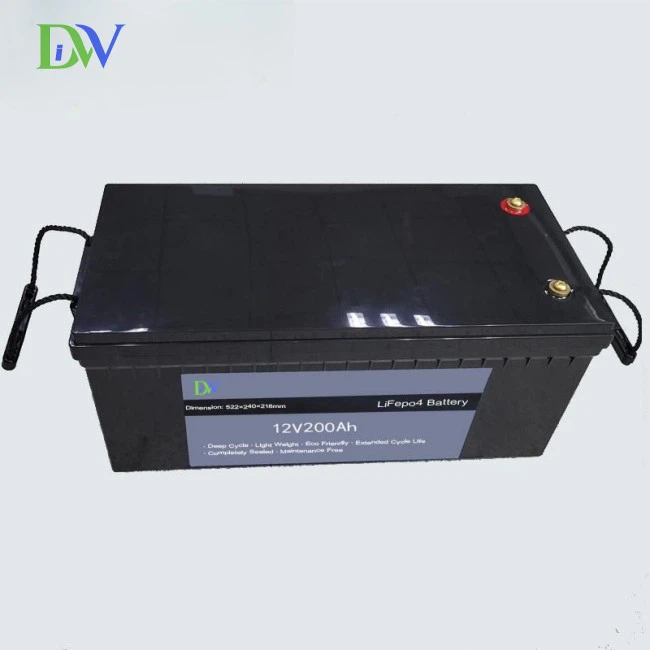
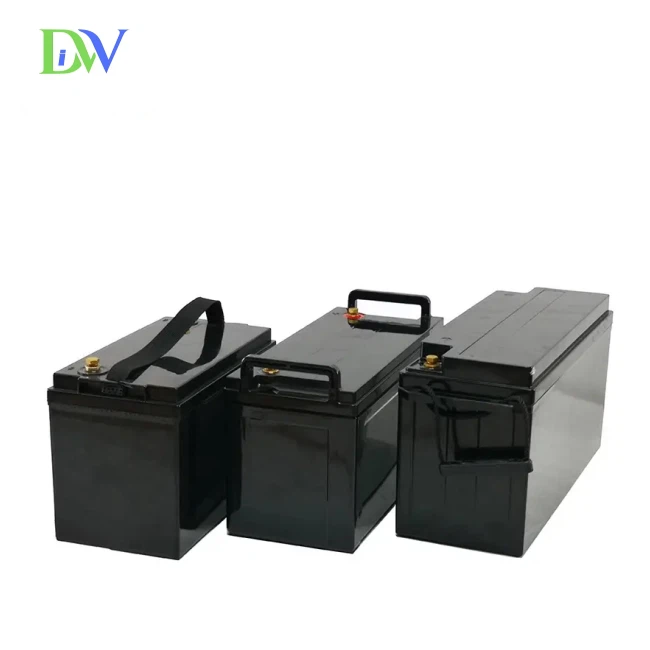
As a reliable energy storage battery supplier, we understand the importance of cost - effectiveness for our customers. Whether you are looking for a Lithium Battery For Camper for your outdoor adventures, a Battery Backup For RV to ensure a stable power supply on the road, or a Lithium Ferro Phosphate Battery for commercial or industrial use, we can offer you high - quality products.
If you are interested in our energy storage batteries and want to conduct a detailed cost - effectiveness analysis for your project, we are here to assist you. We can provide you with detailed product information, cost estimates, and help you perform the necessary calculations. Contact us for more information and let's start a purchase negotiation to find the best energy storage solution for you.
References
- "Handbook of Energy Storage Systems", Editors: John Doe, Jane Smith
- "Cost - Benefit Analysis in the Energy Sector", Author: Robert Johnson
- "Energy Storage Technologies and Applications", Publisher: Energy Institute Press