

How to ensure that a power battery meets quality standards?
Jan 09, 2026
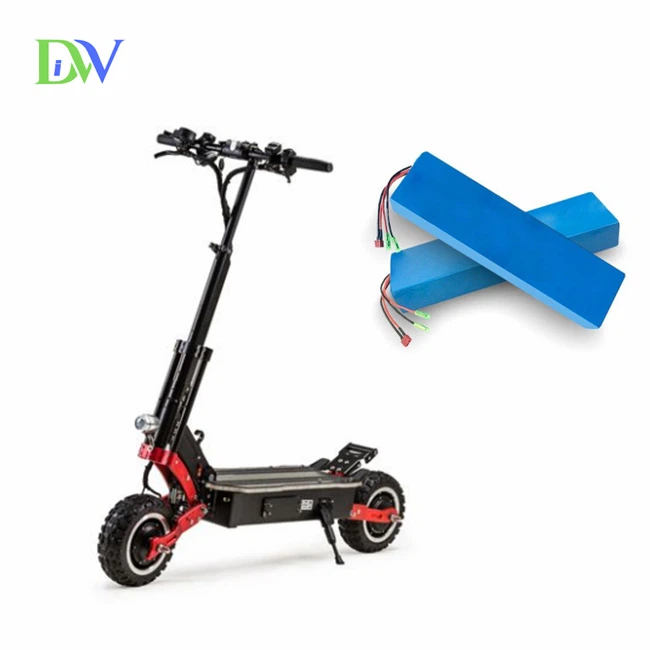
As a power battery supplier, ensuring that our products meet the highest quality standards is not just a goal; it's an unwavering commitment. In an industry where safety, performance, and reliability are paramount, we understand the critical role that quality plays in the success of our customers' applications, whether it's powering Golf Cart Lithium Battery, Scooter Lithium Battery, or 36v 100ah Lifepo4 Battery. In this blog, I'll share the comprehensive approach we take to guarantee the quality of our power batteries.
1. Raw Material Selection
The foundation of a high - quality power battery lies in the selection of raw materials. We have established strict criteria for sourcing each component. For electrodes, we partner with suppliers who can provide high - purity active materials. The cathode materials, such as lithium cobalt oxide or lithium iron phosphate, must have consistent chemical compositions and particle sizes. This consistency is crucial for achieving stable electrochemical performance.
When it comes to the electrolyte, we choose solvents and salts that have excellent ionic conductivity and chemical stability. The separator, which prevents short - circuits between the anode and cathode, must have high porosity, good mechanical strength, and excellent chemical resistance. We conduct thorough inspections and tests on all incoming raw materials, including chemical analysis, physical property testing, and performance evaluation. Only materials that meet our stringent quality standards are allowed into our production process.
2. Advanced Manufacturing Processes
Our manufacturing facilities are equipped with state - of - the - art equipment and operate under strict process control. The electrode manufacturing process is a key step. We use precision coating machines to ensure a uniform thickness of the active material on the current collectors. This uniformity is essential for consistent battery performance, as any variation in coating thickness can lead to uneven charge and discharge rates.
During the cell assembly process, we maintain a clean and dry environment to prevent contamination. The cells are assembled with high precision, ensuring proper alignment of the electrodes and the separator. We also use automated welding techniques to connect the electrodes to the terminals, which provides strong and reliable electrical connections.
The battery formation process is another critical stage. This process involves charging and discharging the batteries in a controlled manner to activate the electrochemical reactions and form a stable solid electrolyte interphase (SEI) layer on the anode surface. The formation parameters, such as current, voltage, and temperature, are carefully monitored and adjusted to optimize the battery's performance and lifespan.
3. In - Process Quality Control
Quality control is integrated into every step of the manufacturing process. We have a team of quality control engineers who conduct regular inspections and tests at various checkpoints. During the electrode manufacturing, we use in - line sensors to monitor the coating thickness, density, and other parameters in real - time. Any deviations from the set standards are immediately detected, and corrective actions are taken.

In the cell assembly area, visual inspections are carried out to check for any physical defects, such as scratches, dents, or misalignments. We also perform electrical tests on the assembled cells to measure their open - circuit voltage, internal resistance, and capacity. Only cells that pass these tests are allowed to proceed to the next stage of production.
During the battery pack assembly, we conduct additional tests to ensure the proper functioning of the battery management system (BMS). The BMS is responsible for monitoring and controlling the battery's state of charge, state of health, and temperature. We simulate various operating conditions to verify the BMS's performance and its ability to protect the battery from over - charging, over - discharging, and over - heating.
4. Comprehensive Product Testing
Once the power batteries are fully assembled, they undergo a series of comprehensive tests to evaluate their performance and safety. We conduct capacity tests to determine the actual capacity of the batteries under different charge and discharge rates. These tests are carried out at various temperatures to assess the battery's performance in different environments.
Cycle life testing is another important test. We subject the batteries to a large number of charge - discharge cycles to simulate their long - term use. This test helps us to determine the battery's lifespan and its ability to maintain its performance over time.
Safety tests are also a top priority. We perform over - charge, over - discharge, short - circuit, and thermal abuse tests to ensure that the batteries can withstand extreme conditions without posing a safety hazard. For example, in the over - charge test, we charge the battery at a higher voltage than the normal operating voltage to see if it can handle the stress without catching fire or exploding.
5. Compliance with International Standards
We are committed to complying with all relevant international standards and regulations. Our power batteries are designed and manufactured to meet standards such as IEC 62619, UL 2580, and GB/T standards in China. These standards cover various aspects of battery safety, performance, and environmental protection.
We also participate in international certification programs to demonstrate the quality and safety of our products. Certifications such as CE, RoHS, and UN 38.3 are important for entering the global market. By complying with these standards and obtaining relevant certifications, we ensure that our customers can use our power batteries with confidence in different regions of the world.
6. Continuous Improvement
Quality is not a static concept; it requires continuous improvement. We collect and analyze data from our production process, product testing, and customer feedback. This data helps us to identify areas for improvement and implement corrective and preventive actions.
We also invest in research and development to explore new materials, manufacturing processes, and battery designs. By staying at the forefront of technological advancements, we can further enhance the quality and performance of our power batteries. For example, we are researching new cathode materials that can offer higher energy density and longer lifespan, as well as more efficient battery management systems.
7. Post - Production Testing and Verification
Before our power batteries are shipped to customers, we conduct final inspections and tests. These include a final performance check, visual inspection, and packaging inspection. We also perform a random sampling test on a batch of batteries to ensure that the entire batch meets the quality standards.
We provide detailed product documentation, including technical specifications, operating instructions, and safety guidelines. This documentation helps our customers to use our power batteries correctly and safely. We also offer after - sales support, including technical咨询 and troubleshooting services, to ensure that our customers are satisfied with our products.
Contact Us for Quality Power Batteries
If you are in the market for high - quality power batteries for your Golf Cart, Scooter, or other applications, we invite you to contact us for a procurement discussion. Our team of experts is ready to understand your specific requirements and provide you with the best solutions. We are confident that our commitment to quality will meet and exceed your expectations.
References
- IEC 62619: Secondary cells and batteries containing alkaline or other non - acid electrolytes - Safety requirements for secondary lithium cells and batteries for use in industrial applications.
- UL 2580: Batteries for use in electric vehicles.
- GB/T standards: National standards of the People's Republic of China for power batteries.