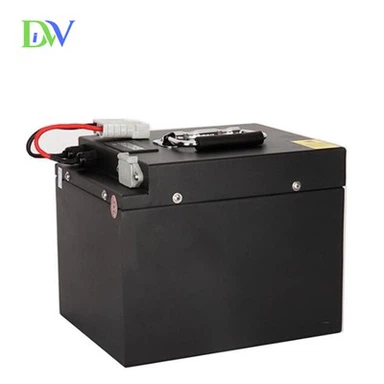
Lithium battery pack BMS software control system
Nov 21, 2023
The software behind BMS controls everything. Most manufacturers regard software as the core technology because it controls the entire BMS. Most hardware can be based on off-the-shelf components, but software requires individual design, not only including thousands of lines of programming code, but the code may involve many algorithms. The control software uses a series of mathematical formulas and calculation methods to understand the various states (SOx) of all batteries at different times, such as how much energy and power can be used at the moment, what the current SOC is, how much SOC is left, and how much SOC is left in the battery. How long is the life expectancy? This algorithm is usually based on a very complex model and is based on a certain system and structure of cells. In most cases, BMS designers study running cells in a controlled laboratory environment to understand how the cells perform under different conditions, and then translate this into code. After a series of iterative steps, it is possible for the software designer to finally design a suitable algorithm to accurately predict the performance of the battery cell under most conditions. Designing a BMS is so complex that a BMS suitable for a certain chemical type of battery cell cannot be used. It is not possible to apply to other cell chemistries of different types. For example, the general working voltage of NMC batteries is 3.7V, while the working voltage of LFP batteries is 33V, and the working voltage of LTO inductors is 2.2V. Therefore, all algorithms must know the highest and lowest voltage at which the battery can operate. Now some BMS manufacturers have developed a variety of different software to serve their own hardware to adapt to different types of battery applications.
BMS is the core control unit of the battery pack.
A cell is electronically connected, or a group of cells is linked to slave circuit boards to form a whole. There have been many studies in the past evaluating these two systems, and they have not shown that active balancing systems have long-term benefits. In other words , as far as the current technical level is concerned, the two equalization methods are equally effective in terms of functionality. Relatively speaking, the cost of the active equalization system is slightly higher. Other functions of BMS In addition to the equalization function, BMS has many other very important functions. For example, although capacity balancing has a significant impact on the life of the battery pack, an energy storage system without balancing function can still work. However, monitoring the temperature and voltage of cells and battery packs is related to system safety. Therefore, one of the core tasks of BMS is to ensure that the battery system and cells are working in a safe state, including monitoring the current of the battery pack, the voltage and temperature of the cells and batteries. Monitoring battery current can determine how much power is available in the system during charging and discharging. If the charging voltage of the battery cell exceeds the maximum voltage or the discharge voltage is lower than the minimum voltage, it will cause the battery cell to fail, because it is very important for the BMS to monitor each cell of the series battery pack (if the cells are connected in parallel, most BMS systems will treat them as for a single cell). This data can guide the system when to start charging and when to stop discharging. Detecting and managing the temperature of the electrical state is another important function, because continuously working under extreme conditions will not only shorten the life of the battery core, but also increase the risk of thermal runaway of the battery core. BMS can tell the system whether it needs to perform maintenance on the battery. The core is heated or cooled. Another important function of the BMS is to communicate with external systems. Many advanced BMS can receive information from the vehicle or engine controller and send feedback. First, BMS can send the demand to reduce or stop battery discharge, and then send the battery status (such as the capacity and energy of the battery map) data, and finally convert these data into mileage or lifespan to provide to the user. Finally, BMS It also determines when to open and close contactors in the system, controlling the flow of electricity from the battery to the motor or from the charging system to the battery for charging.