Analysis of New Energy Lithium Battery Packaging Technology: Co-evolution of Shape and Process
Jan 20, 2026
Analysis of New Energy Lithium Battery Packaging Technology: Co-evolution of Shape and Process
In the tide of the new energy era, the packaging shape of lithium batteries is not just an external form, but a profound embodiment of technology and craftsmanship. The three mainstream packaging shapes-prismatic, cylindrical, and pouch-each have unique manufacturing processes. Like three keys, they lead the way for lithium batteries to shine in their respective application fields. We will delve into the technical paths and core craftsmanship behind these three lithium battery packaging shapes.
01 Prismatic Lithium Batteries > Structural and Design Advantages
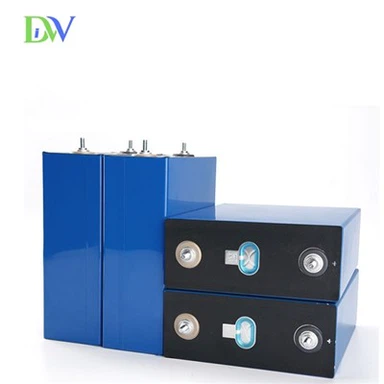
With their regular shape design, prismatic lithium batteries demonstrate significant advantages in space utilization. Their flat structural characteristics enable tight arrangement of batteries, making them ideal for applications with strict spatial layout requirements, such as battery modules of electric vehicles. The regular shape of prismatic batteries gives them an edge in space utilization and structural stability, making them highly suitable for electric vehicles.
> Exquisite Manufacturing Processes
The manufacturing process of prismatic lithium batteries is equally noteworthy. Precision manufacturing is the key to prismatic lithium battery production; accurate shell fabrication and strict cell assembly ensure high performance. The production process involves multiple precision steps, including battery shell forming, electrode material coating and drying, and separator assembly.
Shell Fabrication: The shells of prismatic lithium batteries are mostly made of metal materials, such as aluminum alloy or stainless steel. Through processes like stamping and stretching, metal sheets are carefully processed into shells of specific shapes and sizes with the help of molds.
Cell Assembly: As the core component of prismatic lithium batteries, the cell assembly process is extremely rigorous. After stacking or winding positive and negative electrode sheets and separators in an orderly manner to form cells, they are carefully placed into the pre-formed shells.
Sealing and Welding: To ensure the hermeticity and safety of batteries, advanced processes such as laser welding or resistance welding are adopted to tightly bond the shell and the top cover.
> Application Scenarios and Challenges
Prismatic lithium batteries play an important role in fields such as electric vehicles and energy storage systems. Prismatic batteries are crucial for electric vehicles, but they feature complex production processes, high costs, and heat dissipation challenges. Their compact structure allows batteries to better adapt to the chassis space of vehicles, yet the sophisticated production processes and high costs impose strict requirements on production equipment and process control.
02 Cylindrical Lithium Batteries > Unique Structural Characteristics
Cylindrical lithium batteries stand out in the battery field with their rounded shape. The circular design of cylindrical batteries provides excellent heat dissipation performance, and standardized specifications facilitate production and interchangeability. Common specifications such as 18650 and 21700 feature standardized dimensions, a design that not only enables large-scale production but also promotes the interchangeable use of batteries.
> Straightforward Manufacturing Processes
The manufacturing process of cylindrical lithium batteries is also worthy of exploration. Cylindrical battery manufacturing focuses on shell forming and cell winding, characterized by simplicity and high efficiency. From raw material preparation to battery forming, every step embodies exquisite craftsmanship and wisdom.
Shell Forming: The shells of cylindrical lithium batteries are usually made of metal materials through precision processing.
Cell Winding: The cell manufacturing adopts a winding process, which involves alternately stacking positive and negative electrode sheets with separators and then winding them into cells.
Sealing and Assembly: After the cell winding is completed, sealing and assembly processes are carried out.
> Application Fields and Challenges
Cylindrical batteries have advantages in consumer electronics, but face significant challenges in energy density and electric vehicle applications. They occupy a prominent position in consumer electronic products, yet their application in the electric vehicle field encounters certain challenges.
03 Pouch Lithium Batteries > Unique Charm of Flexible Structure
Pouch lithium batteries are significantly different from traditional prismatic and cylindrical lithium batteries with their innovative flexible structure design. The flexible structure of pouch batteries enables customized design capabilities and offers higher safety than traditional-shaped batteries. Their shells are made of aluminum-plastic composite films, a material that not only has the barrier properties of metals but also integrates the flexibility of plastics.
> Detailed Analysis of Refined Manufacturing Processes
The manufacturing process of pouch lithium batteries is also indispensable. Pouch battery manufacturing is complex, requiring precise control of film preparation and cell stacking. The careful preparation of aluminum-plastic composite films and the precise stacking of cells are both crucial steps in the manufacturing process.
Careful Preparation of Aluminum-Plastic Composite Films: This step aims to improve the barrier properties, heat-sealing performance, and electrolyte corrosion resistance of the films.
Precise Cell Stacking: Pouch lithium batteries mostly adopt a stacking process for cell preparation, which is different from the winding process used for cylindrical batteries.
Stringent Heat-Sealing and Packaging Processes: After cell stacking is completed, strict heat-sealing processes are carried out for hermetic packaging.
> Applications and Challenges
Pouch lithium batteries show broad application prospects in consumer electronics, wearable devices, and some high-end electric vehicle fields. Pouch batteries are suitable for wearable devices and high-end automobiles, but come with high costs and manufacturing difficulties. Although the high energy density and flexible design capabilities of pouch batteries bring advantages, their manufacturing processes have strict requirements for environmental humidity and cleanliness, which increases production costs.
Comparison of Technical Routes and Future Outlook
> Comparison of Technical Routes
In terms of manufacturing processes, prismatic lithium batteries are particularly complex due to their unique design and precision sealing processes. In contrast, the manufacturing process of cylindrical lithium batteries is relatively simple. Although the cell stacking process of pouch lithium batteries is relatively straightforward, the preparation of aluminum-plastic composite films and heat-sealing processes have extremely stringent requirements for the environment and equipment. Each battery shape has its own strengths in technical routes and application fields, with distinct future development directions.
> Future Outlook
Looking to the future, with the continuous innovation of new energy technologies, lithium batteries of all three packaging shapes will continue to explore and innovate in their respective advantageous fields. Prismatic lithium batteries are expected to further optimize processes, improve performance, and reduce costs in the electric vehicle and energy storage sectors. All battery shapes will continue to innovate, enhance performance and adaptability, and jointly drive the progress of new energy. The future development of lithium battery packaging shape technology routes will focus on core goals such as improving energy density, enhancing safety, reducing costs, and adapting to diverse application scenarios.