A Comprehensive Analysis of Lithium Batteries
Jan 04, 2026
A Comprehensive Analysis of Lithium Batteries: From Fundamentals to Production, Structure, Processes, Applications and Industry Trends
Lithium batteries have long been the "energy core" across sectors such as consumer electronics, new energy vehicles, energy storage systems and even low-altitude economy. Ranging from small devices like mobile phones and laptops to large-scale equipment such as electric vehicles and energy storage power stations, their performance directly determines the endurance, safety level and service life of the equipment. This article comprehensively disassembles this critical energy component, covering its core composition, advantages and disadvantages comparison, classification system, professional terminology, naming rules, as well as the entire production process and industry practices, unveiling the technical mysteries of lithium batteries for you.
I. Core Composition of Lithium Batteries: Synergy Between "Heart" and "Brain"
The stable operation of a lithium battery relies on the synergy of two major systems: "energy supply" and "safety control". Specifically, it can be divided into two parts: the battery cell and the protection board (or BMS), each of which has an irreplaceable function.
1. Battery Cell: The "Energy Heart" of Lithium Batteries
The battery cell is the core for storing and releasing electrical energy, equivalent to the "heart" of a lithium battery. Its performance directly determines the energy density, cycle life and safety of the battery. The battery cell mainly consists of 5 key components:
Cathode Material: The "source" of energy output, which releases lithium ions during discharge. Common materials include lithium cobalt oxide (LiCoO₂, used in consumer electronics such as mobile phones and laptops, featuring high voltage platform but weak safety), lithium iron phosphate (LiFePO₄, used in energy storage and electric vehicles, with high safety and long cycle life), ternary lithium (LiNiₓCoᵧMn_zO₂, used in high-end electric vehicles, boasting high energy density), and lithium manganate (LiMn₂O₄, used in power tools, with low cost but poor high-temperature stability).
Anode Material: The "warehouse" for energy storage, which adsorbs lithium ions during charging and sends them back to the cathode during discharge. Currently, graphite is the mainstream (with low cost and good stability, accounting for more than 90% of the anode material market). The new generation of silicon-based anodes (with theoretical capacity more than 10 times that of graphite) is gradually being commercialized, while lithium metal anodes are still in the R&D stage due to dendrite issues.
Electrolyte: The "channel" for lithium ion migration, usually composed of lithium salt (e.g., LiPF₆, providing lithium ions), organic solvents (e.g., carbonates, dissolving lithium salts) and additives (improving cycle life and safety). Its purity and stability directly affect the high and low-temperature performance and safety level of the battery. For example, excessive moisture will react with lithium salts to generate harmful gases, causing potential safety hazards.
Separator: The "safety barrier" between the cathode and anode, a porous polymer film (mostly polyethylene PE and polypropylene PP). It can not only prevent direct contact and short circuit between the cathode and anode but also allow lithium ions to pass through. High-quality separators need to have uniform pore size, sufficient mechanical strength and chemical stability. At high temperatures, they can also block ion transmission through the "shutdown effect" to avoid thermal runaway.
Shell: The "protective cover" of the battery cell, divided into aluminum shell (prismatic batteries, such as mobile phone batteries), steel shell (cylindrical batteries, such as 18650) and aluminum-plastic composite film (pouch batteries, such as thin mobile phones and wearable devices) according to the shape. The shell needs to have explosion-proof, high-temperature resistant and corrosion-resistant properties, while being as lightweight as possible to improve the energy density of the battery.
2. Protection Board: The "Safety Brain" of Lithium Batteries
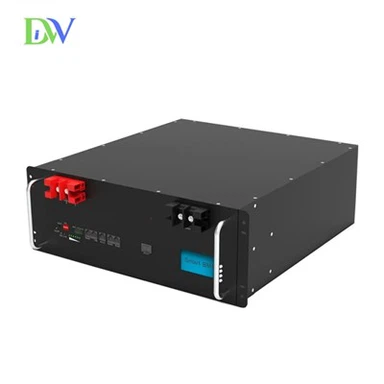
If the battery cell is the "energy heart", the protection board is the "safety brain", responsible for monitoring the charging and discharging status of the battery to avoid risks such as overcharging, over-discharging and short circuit. The protection board of power batteries is usually called the Battery Management System (BMS), with a more complex structure, while the protection board of consumer batteries (such as mobile phone batteries) is relatively simplified. The core components include:
Protection Chip/Management Chip: The core control unit, which real-time monitors the voltage, current and temperature of the battery. When abnormalities are detected (e.g., overcharging with voltage exceeding 4.2V, over-discharging with voltage below 3.0V), it triggers the protection mechanism.
MOSFET: The "switch" of current, which cuts off or conducts the charging and discharging circuit under the instruction of the chip. For example, during overcharging, the MOSFET disconnects the charging path to avoid battery cell damage.
Resistors and Capacitors: Auxiliary components, used for current sampling and voltage filtering to ensure the accuracy of detection data.
PCB Board: The "carrier" of components, integrating chips, MOSFETs and other parts to form a stable circuit system.
PTC/NTC: Temperature protection components. PTC (Positive Temperature Coefficient thermistor) has a sharp increase in resistance at high temperatures to limit current; NTC (Negative Temperature Coefficient thermistor) senses temperature in real time and provides temperature data for the chip.
II. Advantages and Disadvantages of Lithium Batteries: Why Can They Become the Mainstream Energy Source?
Lithium batteries can replace lead-acid, nickel-cadmium and nickel-metal hydride batteries to become the first choice in consumer electronics and new energy fields, thanks to their outstanding performance advantages, but they also have undeniable shortcomings. We can more intuitively understand the positioning of lithium batteries through a horizontal comparison of four mainstream battery types:
1. Core Advantages: Why Are Lithium Batteries Irreplaceable?
High Energy Density: The gravimetric energy density is 4-8 times that of lead-acid batteries, and the volumetric energy density is 4-5 times that of lead-acid batteries. This means that lithium batteries can store more electrical energy under the same weight/volume. For example, a mobile phone lithium battery with a capacity of 1900mAh weighs only about 20g, while a lead-acid battery with the same capacity weighs more than 1kg, which is completely unsuitable for portable devices.
Long Cycle Life: High-quality lithium batteries can achieve more than 1500 cycles, and lithium iron phosphate batteries can even exceed 6000 cycles, while lead-acid batteries only have 200-300 cycles. Taking electric vehicles as an example, models equipped with lithium batteries have a battery life of 5-8 years, far exceeding the 1-2 years of lead-acid batteries.
Environmentally Friendly and Pollution-Free: Free of toxic heavy metals such as lead, mercury and cadmium, it is environmentally friendly throughout the entire life cycle of production, use and scrapping, in line with the global "dual carbon" trend. In contrast, lead pollution from lead-acid batteries and cadmium pollution from nickel-cadmium batteries have been restricted in many countries.
Low Self-Discharge Rate: The monthly self-discharge rate is only 2%-9%, much lower than the 20%-30% of nickel-metal hydride batteries. A fully charged mobile phone lithium battery can still retain more than 80% of its power after being idle for one month, while a nickel-metal hydride battery may only have 50% left.
High Voltage Platform: The nominal voltage of a single cell is 3.2-3.7V, equivalent to the series voltage of 3 nickel-cadmium/nickel-metal hydride batteries. It can meet the equipment requirements without multiple series connections, simplifying the battery pack design.
2. Main Shortcomings: What Problems Still Need to Be Solved?
High Cost: The battery cost is about 2.0-3.5 CNY per Wh, 2-5 times that of lead-acid batteries. Although it is gradually decreasing with large-scale production, it is still the main cost item of new energy vehicles and energy storage systems.
Poor Temperature Adaptability: The optimal operating temperature is 0-45℃. When the temperature is below 0℃, the capacity decays significantly (e.g., at -20℃, the capacity may only be 50% left); when the temperature is above 60℃, there are safety risks. Additional heating/cooling systems need to be configured, increasing costs and complexity.
Safety Hazards: Liquid electrolytes are flammable. If the protection system fails (such as overcharging, puncture, extrusion), it may cause thermal runaway, leading to fire and explosion. Therefore, lithium batteries must be equipped with BMS or protection boards and cannot be used "naked" like lead-acid batteries.
High Requirements for Chargers: Constant current and constant voltage chargers are required to ensure a stable charging process and avoid overcharging, while lead-acid batteries only need a simple voltage regulator, and the charger cost is lower.
III. Classification System of Lithium Batteries: How to Choose for Different Scenarios?
There are many types of lithium batteries, which can be divided into multiple categories according to different dimensions. Batteries of different categories have significant performance differences and are suitable for different scenarios. Mastering the classification logic can help you better understand "why cobalt lithium batteries are used in mobile phones and lithium iron phosphate/ternary lithium batteries are used in electric vehicles".
1. By Charging and Discharging Characteristics: Primary Batteries vs Secondary Batteries
Primary (Non-rechargeable) Batteries: Also known as lithium primary batteries, such as lithium manganese dioxide batteries (CR2032 button batteries, used in remote controls and watches) and lithium-thionyl chloride batteries (used in Internet of Things devices and medical implantable instruments). They are characterized by high capacity and long storage life (up to 10 years), but cannot be recharged and are discarded after use.
Secondary (Rechargeable) Batteries: Also known as storage batteries, they are the most commonly used type in daily life, such as mobile phone batteries and electric vehicle batteries. They can be charged and discharged repeatedly for 500-1500 times. The core is the reversible reaction of "lithium ion migration between the cathode and anode", which is also the focus of this article.
2. By Cathode Material: Determining the Core Performance of Batteries
This is the most core classification method, and the cathode material directly determines the energy density, safety and cost of the battery:
Lithium Cobalt Oxide (LiCoO₂): High energy density (200-250Wh/kg), high voltage platform (3.7V), but poor safety and short cycle life (500-800 cycles), mainly used in consumer electronics such as mobile phones and laptops.
Lithium Iron Phosphate (LiFePO₄): Extremely high safety (thermal runaway temperature exceeds 200℃), long cycle life (1500-6000 cycles), low cost, but low energy density (120-180Wh/kg), mainly used in energy storage systems, electric buses and low-end electric vehicles.
Ternary Lithium (LiNiₓCoᵧMn_zO₂): High energy density (200-300Wh/kg), good low-temperature performance, but medium safety and high cost. It is divided into NCM523, NCM622 and NCM811 according to nickel content (the higher the nickel content, the higher the energy density), mainly used in high-end electric vehicles and drones.
Lithium Manganate (LiMn₂O₄): Low cost, good high-temperature stability, but low energy density (100-150Wh/kg) and short cycle life (300-500 cycles), mainly used in power tools and low-speed electric vehicles.
3. By Shape: Adapting to Different Equipment Spaces
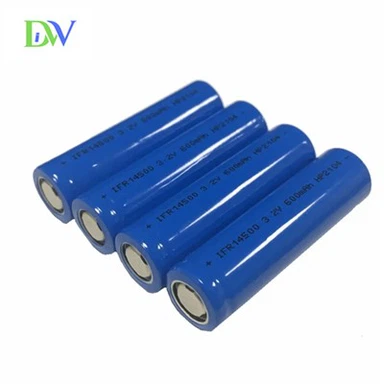
Cylindrical Batteries: Such as 18650 (18mm in diameter, 65mm in height) and 21700 (21mm in diameter, 70mm in height), with stable structure and high mass production efficiency, mainly used in laptops and electric vehicles (e.g., Tesla's early models used 18650, and later switched to 21700).
Prismatic Batteries: Such as mobile phone batteries (3-5mm in thickness, 40-60mm in width) and electric vehicle power batteries (10-20mm in thickness, 100-200mm in width), with high space utilization rate and can be customized according to equipment size, which is the mainstream form of electric vehicles at present.
Pouch Batteries: Encapsulated with aluminum-plastic composite film, they can be made ultra-thin (0.5-2mm in thickness) and flexible, mainly used in thin mobile phones, wearable devices (such as smart watches) and foldable mobile phones.
4. By Electrolyte State: Liquid vs Polymer
Lithium Ion Batteries (LIB): Using liquid electrolytes, with high energy density and low cost, but there is a risk of leakage. Most cylindrical and prismatic hard-shell batteries belong to this category.
Polymer Lithium Batteries (PLB): Using gel or solid electrolytes, without leakage risk and can be flexibly deformed. Most pouch batteries belong to this category, mainly used in consumer electronics.
5. By Application: Regular Batteries vs Power Batteries
Regular Batteries: Used in consumer electronics such as mobile phones and laptops, with small capacity (1000mAh-10Ah) and low discharge rate (0.5-2C), requiring high energy density.
Power Batteries: Used in electric vehicles and drones, with large capacity (50Ah-500Ah) and high discharge rate (5-30C), needing to withstand large current discharge (e.g., when the car accelerates), requiring higher safety and cycle life.
IV. Essential Terminology of Lithium Batteries: Distinguishing Concepts from Capacity to SOC
When purchasing or using lithium batteries, you will often encounter terms such as "capacity", "C-rate" and "SOC". Understanding these concepts can help you accurately judge battery performance and avoid being misled by "falsely marked parameters".
1. Capacity: How Much Electricity Can a Battery Store?
Definition: The amount of electricity a battery can release under certain discharge conditions, calculated by the formula Q=I×t (I is current, t is time), with units of Ah (ampere-hour) or mAh (milliampere-hour).
Plain Explanation: 1Ah means the battery can discharge at 1A current for 1 hour, and 1mAh means it can discharge at 1mA current for 1 hour. For example, a mobile phone battery with 1900mAh means it can discharge at 190mA current for 10 hours.
Common Scenarios: Mobile phone batteries: 800-1900mAh; electric bicycles: 10-20Ah; electric vehicles: 20-200Ah; energy storage batteries: 100-1000Ah.
2. Charge/Discharge Rate (C-rate): How Fast Is Charging/Discharging?
Definition: The charge/discharge current expressed as a multiple of the battery's nominal capacity. 1C is the current for "fully charging/discharging in 1 hour".
Calculation Method: If the battery capacity is 1500mAh, 1C=1500mA, 2C=3000mA (fully discharged in 0.5 hours), 0.1C=150mA (fully discharged in 10 hours).
Notes: The higher the discharge rate, the lower the actual capacity of the battery (e.g., the capacity at 2C discharge may only be 80% of that at 1C discharge), and the more serious the heat generation. Therefore, power batteries need to have high-rate discharge capability (e.g., electric vehicles require more than 5C).
3. Voltage (OCV): The "Voltage Platform" of Batteries
Nominal Voltage: The rated voltage of the battery. Regular lithium batteries are 3.2-3.7V (lithium cobalt oxide: 3.7V; lithium iron phosphate: 3.2V), which is an important indicator of battery performance.
Open Circuit Voltage (OCV): The voltage of the battery when no load is connected, which can be used to judge the battery state (e.g., the OCV of a fully charged lithium cobalt oxide battery is about 4.2V, and about 3.0V when it is out of power).
Voltage Platform: The voltage stable range during battery charging and discharging (usually 20%-80% of the capacity), where the voltage changes little. For example, the voltage platform of lithium cobalt oxide batteries is 3.6-3.9V, which is also the normal working voltage range of the equipment.
4. Energy and Power: How Long Can It Be Used? How Much Power Can It Output?
Energy: The total electrical energy that the battery can store, calculated by the formula E=U×Q (U is voltage, Q is capacity), with units of Wh (watt-hour) or kWh (kilowatt-hour, 1kWh=1 degree of electricity). For example, a mobile phone battery with 1900mAh and 3.7V has an energy of 3.7V×1.9Ah=7.03Wh.
Power: The energy that the battery can output per unit time, calculated by the formula P=U×I, with units of W (watt). Power determines the "burst power" of the equipment. For example, electric vehicles need high-power batteries when accelerating, while mobile phones only need low-power batteries.
5. Cycle Life: How Many Times Can a Battery Be Charged and Discharged?
Definition: One charge and discharge of the battery is one cycle. When the capacity decays to 60%-70% of the initial capacity, it is considered the end of life.
Standard Test: The IEC standard stipulates that mobile phone lithium batteries discharged to 3.0V at 0.2C and charged to 4.2V at 1C should have a capacity of ≥60% after 500 cycles; the national standard stipulates that the capacity should be ≥70% after 300 cycles.
Usage Suggestion: Avoid deep charging and discharging (e.g., do not charge to 100% or discharge to 0% every time), which can extend the cycle life. For example, keeping the mobile phone battery at 20%-80% of the power can extend the life to more than 1000 cycles.
6. Depth of Discharge (DOD) and State of Charge (SOC): How Much Power Is Left in the Battery?
DOD: The percentage of the discharged capacity to the rated capacity. For example, if the discharged capacity is 500mAh and the rated capacity is 1000mAh, DOD=50%. The deeper the DOD, the shorter the battery life.
SOC: The percentage of the remaining capacity to the rated capacity. 0% means no power, and 100% means fully charged. BMS judges the remaining power of the battery through SOC, and the mobile phone power display is calculated based on SOC.
7. Cut-Off Voltage: The "Red Line" of Charging/Discharging
Charge Cut-Off Voltage: The voltage at which the battery cannot be charged further. For lithium cobalt oxide batteries, it is 4.2V; for lithium iron phosphate batteries, it is 3.65V. Exceeding this voltage will cause battery cell damage and thermal runaway.
Discharge Cut-Off Voltage: The voltage at which the battery cannot be discharged further. For lithium cobalt oxide batteries, it is 3.0V; for lithium iron phosphate batteries, it is 2.5V. Below this voltage will cause irreversible damage to the anode, and the capacity cannot be recovered.
8. Internal Resistance: The "Invisible Loss" of Batteries
Definition: The resistance inside the battery that hinders current flow, with units of mΩ (milliohm), divided into ohmic internal resistance (caused by materials and structure) and polarization internal resistance (caused by electrochemical reactions).
Impact: The smaller the internal resistance, the higher the charging and discharging efficiency of the battery and the less heat generation. For example, the internal resistance of power batteries needs to be controlled below 50mΩ, otherwise, severe heat generation will occur during high-current discharge.
V. Naming Rules of Lithium Batteries: Understanding Dimensions from Models
The naming of lithium batteries varies among different manufacturers, but general batteries follow the IEC61960 standard. The type and size of the battery can be judged through the model to avoid buying the wrong model.
1. Cylindrical Batteries: 3 Letters + 5 Numbers
Letter Meaning: The first letter indicates the anode material (I = built-in lithium ion, L = lithium metal); the second letter indicates the cathode material (C = cobalt, N = nickel, M = manganese, V = vanadium); the third letter = R (cylindrical).
Number Meaning: The first 2 numbers = diameter (mm), the last 3 numbers = height (mm).
Examples: ICR18650 - I (lithium ion anode), C (lithium cobalt oxide cathode), R (cylindrical), 18mm in diameter, 65mm in height, the most common battery for laptops and electric vehicles; INR21700 - I (lithium ion anode), N (nickel-based cathode, ternary lithium), R (cylindrical), 21mm in diameter, 70mm in height, with 50% higher capacity than 18650, used in Tesla Model 3.
2. Prismatic Batteries: 3 Letters + 6 Numbers
Letter Meaning: The first two letters are the same as those of cylindrical batteries, the third letter = P (prismatic).
Number Meaning: The first 2 numbers = thickness (mm), the middle 2 numbers = width (mm), the last 2 numbers = height (mm).
Examples: ICP053353 - I (lithium ion anode), C (lithium cobalt oxide cathode), P (prismatic), 5mm in thickness, 33mm in width, 53mm in height, a typical mobile phone battery; IFP101520 - I (lithium ion anode), F (iron-based cathode, lithium iron phosphate), P (prismatic), 10mm in thickness, 15mm in width, 20mm in height, used in smart watches.
VI. Entire Production Process of Lithium Batteries: Striving for Excellence in Every Step from Materials to Cells
Lithium battery production is a complex and highly automated process, involving three major links: front-end, middle-end and back-end processes. The precision control of each link directly affects battery performance and safety, known as the "combination of fine chemical industry and precision manufacturing".
1. Front-End Process: Electrode Sheet Manufacturing (Key to Determining Battery Capacity)
Slurry Mixing: Mix cathode active materials (e.g., LiCoO₂), conductive agents (carbon black), binders (PVDF) and solvents (NMP) in a vacuum mixer to form a uniform slurry; the same applies to the anode, with graphite as the active material, CMC/SBR as the binder and water as the solvent. Core requirement: The slurry should be uniform without particles, otherwise, it will lead to uneven capacity.
Coating: Uniformly coat the cathode/anode slurry on the current collector (aluminum foil for the cathode, copper foil for the anode), controlling the coating thickness (±1μm) and areal density (weight of active material per unit area). Core requirement: The coating should be uniform, otherwise, it will cause local heating and capacity attenuation of the battery.
Drying: Evaporate the solvent (NMP or water) in an oven, with the temperature controlled at 80-120℃. The wind speed and rate need to be precise to avoid coating cracking and curling.
Calendering: Cold-press the dried electrode sheets with a precision calender to increase the coating density (reduce porosity), improve energy density, and ensure uniform thickness (±0.5μm).
Slitting: Longitudinally cut the wide electrode sheets into narrow strips of the required width, avoiding burrs (burrs will cause short circuits).
Tab Welding: Weld metal tabs (aluminum tabs for the cathode, nickel tabs for the anode) at specified positions on the electrode sheets as current extraction points. The welding quality must ensure no cold solder joints or false welding.
2. Middle-End Process: Cell Assembly (Key to Determining Battery Safety)
Winding/Stacking: Stack the cathode, separator and anode in the order of "separator - anode - separator - cathode", and wind them into cylindrical/prismatic cells with a winding machine (wound type), or stack them into prismatic cells with a stacking machine (stacked type). The stacked type has higher space utilization rate and lower internal resistance but low efficiency; the wound type has high efficiency and is suitable for mass production.
Casing/Encapsulation: Put cylindrical/prismatic hard-shell cells into metal shells (steel/aluminum shells); put pouch cells into aluminum-plastic composite film shells.
Baking: Put the encapsulated cells into a vacuum oven and bake at 80-120℃ for 4-8 hours to completely remove moisture from the cells (moisture content should be controlled below 50ppm), otherwise, it will react with the electrolyte to generate harmful gases.
Electrolyte Injection: Inject a precisely measured amount of electrolyte into the cells in a dry room with a dew point below -40℃. The electrolyte must fully infiltrate the electrode sheets and separators. The error of the injection amount should be controlled within ±0.1g, otherwise, it will affect the battery capacity.
Sealing: Vacuum heat-seal the electrolyte injection port of pouch cells; seal the electrolyte injection hole of hard-shell cells with steel balls (cylindrical) or sealing nails (prismatic), and ensure air tightness by laser welding (air leakage will cause electrolyte volatilization and capacity attenuation).
3. Back-End Process: Formation and Testing (Screening Qualified Products)
Formation: Charge the cells for the first time to form a stable Solid Electrolyte Interface (SEI) film on the anode surface, which allows lithium ions to pass through but blocks electrons, which is the key to battery cycle life and safety. The charging current is small (0.1-0.2C) and the time is long (8-12 hours).
Aging: Let the formed cells stand at room temperature or high temperature (45℃) for 3-7 days to stabilize the SEI film, and screen out defective cells with excessive self-discharge (e.g., cells with voltage drop exceeding 50mV).
Capacity Grading: Perform standard charge-discharge tests on the aged cells (charge to the upper limit voltage, discharge to the lower limit voltage), measure the actual capacity, and grade according to capacity (e.g., Grade A: 4950-5050mAh, Grade B: 4850-4950mAh) to ensure consistent capacity of cells in the same group.
Sorting: Classify the cells according to parameters such as capacity, open circuit voltage and internal resistance, and eliminate defective products (e.g., cells with excessive internal resistance and insufficient capacity).
Appearance and Performance Testing: Check the appearance of the cells (no scratches, leakage or deformation), conduct insulation resistance, AC internal resistance and short circuit tests to ensure that the safety performance meets the standards.
VII. Industry Trends and Enterprise Practices: Where Is the Future of Lithium Batteries?
With the rapid development of the new energy industry, lithium battery technology continues to break through, and a number of enterprises focusing on segmented fields have emerged, promoting the extension of lithium batteries from the "consumer electronics" field to the "industrial and energy" fields.
1. Technology Trends: From Liquid to Solid, From High Capacity to High Safety
Solid-State Batteries: Replace liquid electrolytes and separators with solid electrolytes, greatly improving safety (no leakage or thermal runaway risk), with energy density up to 400-600Wh/kg (twice that of existing lithium batteries), which can support electric vehicles with a cruising range of more than 1000km. At present, semi-solid batteries (with electrolyte content of 5%-10%) have entered the mass production stage (e.g., NIO ET7 semi-solid battery version), and all-solid-state batteries are expected to be mass-produced around 2030.
Fast Charging Technology: Achieve "80% charge in 10 minutes" through material optimization (such as silicon-based anodes, fast-charging electrolytes) and structural design. For example, the S4 super-charging battery equipped on Xpeng G9 can charge 400km in 10 minutes.
Cost Reduction: Through large-scale production (global lithium battery production capacity has exceeded 2TWh), material innovation (such as lithium manganese iron phosphate replacing ternary lithium), and process optimization (such as CTP/CTC technology, reducing module components), the battery cost has dropped from 5 CNY/Wh in 2015 to below 1.5 CNY/Wh in 2025, and is expected to further drop to 1 CNY/Wh in the future.
2. Enterprise Practice: Zhongchuang Feiyue - Focusing on the "Battery Swapping Revolution" of Two-Wheeled Electric Vehicles
In the field of two-wheeled electric vehicles, the application of lithium batteries is upgrading from "charging" to "battery swapping". Zhongchuang Feiyue (affiliated to Zhongchuang New Energy Technology Group) is a representative enterprise of this trend. Its core practices include:
Scenario-Based Solutions: Provide high-safety and long-life lithium batteries for scenarios such as shared electric bicycles, instant delivery (takeout, express delivery) and personal travel. For example, the battery of delivery vehicles has a cycle life of more than 2000 times, meeting the daily cruising range demand of 100km.
Innovative Battery Swapping Model: Put forward the concept of "battery swapping instead of charging is safer", and deploy battery swapping stations in more than 100 cities across the country. Users can complete battery swapping in only 30 seconds, solving the problems of "slow charging and charging safety hazards" of two-wheeled vehicles, serving more than 400 million two-wheeled travel users.
Production Capacity and Globalization: With an annual production capacity of over 5GWh, the products are exported to more than 10 countries, adapting to the voltage standards and climatic conditions of different countries (e.g., high-temperature version batteries for Southeast Asia, which can work stably in 60℃ environment).
Conclusion: Lithium Batteries - The Core Engine of the Energy Revolution
From mobile phones to electric vehicles, from energy storage to low-altitude economy, lithium batteries have become the core engine driving the energy revolution. Their technological evolution is not only related to the improvement of equipment performance but also to the realization of the "dual carbon" goal and the transformation of the energy structure. In the future, with the breakthrough of solid-state batteries and fast charging technology, as well as the continuous reduction of costs, lithium batteries will play a role in more fields (such as aerospace and deep-sea exploration), providing a solid support for the future of human green energy.
For ordinary users, understanding the basic principles and performance parameters of lithium batteries can help us use batteries more scientifically (such as avoiding overcharging and over-discharging); for industry practitioners, grasping technical trends and scenario needs is the key to finding opportunities in the "hundred-billion-level track" of lithium batteries. Whether you are a consumer or a practitioner, the story of lithium batteries is still continuing.