

What is the internal resistance of a UPS backup lithium battery?
May 15, 2025
Hey there! As a supplier of UPS backup lithium batteries, I often get asked about the internal resistance of these batteries. It's a pretty important topic, so I thought I'd break it down for you in this blog post.
First off, let's talk about what internal resistance actually is. In simple terms, internal resistance is the resistance that exists within a battery itself. Every battery has some amount of internal resistance, and it can have a big impact on how the battery performs.
When a battery is being charged or discharged, current flows through it. The internal resistance of the battery causes a voltage drop within the battery. This means that the actual voltage available at the battery terminals is lower than the battery's nominal voltage. The higher the internal resistance, the greater the voltage drop, and the less efficient the battery is.
So, why does internal resistance matter for UPS backup lithium batteries? Well, UPS (Uninterruptible Power Supply) systems are designed to provide backup power in case of a mains power failure. The efficiency and performance of the UPS system depend largely on the performance of the batteries. A battery with high internal resistance will not be able to deliver power as effectively as a battery with low internal resistance. This can lead to reduced backup time, slower charging times, and overall poor performance of the UPS system.

Now, let's look at some factors that can affect the internal resistance of a UPS backup lithium battery.

1. Battery Chemistry
Different types of lithium battery chemistries have different internal resistances. For example, lithium iron phosphate (LiFePO4) batteries generally have lower internal resistance compared to other lithium chemistries like lithium cobalt oxide (LiCoO2). This is one of the reasons why LiFePO4 batteries are often preferred for UPS applications. They can deliver power more efficiently and have a longer lifespan.
2. Temperature
Temperature has a significant impact on the internal resistance of a battery. At low temperatures, the internal resistance of a lithium battery increases. This is because the chemical reactions within the battery slow down, making it harder for the ions to move through the electrolyte. On the other hand, at high temperatures, the internal resistance decreases, but high temperatures can also cause other problems like battery degradation and reduced lifespan.
3. State of Charge (SOC)
The state of charge of a battery also affects its internal resistance. Generally, the internal resistance is lowest when the battery is fully charged and increases as the battery discharges. This is because as the battery discharges, the concentration of ions in the electrolyte changes, which affects the conductivity of the electrolyte and thus the internal resistance.
4. Battery Age and Usage
As a battery ages and goes through multiple charge-discharge cycles, its internal resistance tends to increase. This is due to various factors such as the growth of solid electrolyte interphase (SEI) layers on the electrodes, the degradation of the active materials in the electrodes, and the loss of electrolyte.
So, how can you measure the internal resistance of a UPS backup lithium battery? There are a few methods, but one of the most common is the AC impedance method. This method involves applying a small AC signal to the battery and measuring the resulting voltage and current. By analyzing the phase difference between the voltage and current, you can calculate the internal resistance of the battery.

As a supplier of UPS backup lithium batteries, we pay close attention to the internal resistance of our batteries. We use high-quality materials and advanced manufacturing processes to ensure that our batteries have low internal resistance and high performance. Our batteries are designed to provide reliable backup power for your UPS systems, whether you're using them in a small home office or a large data center.
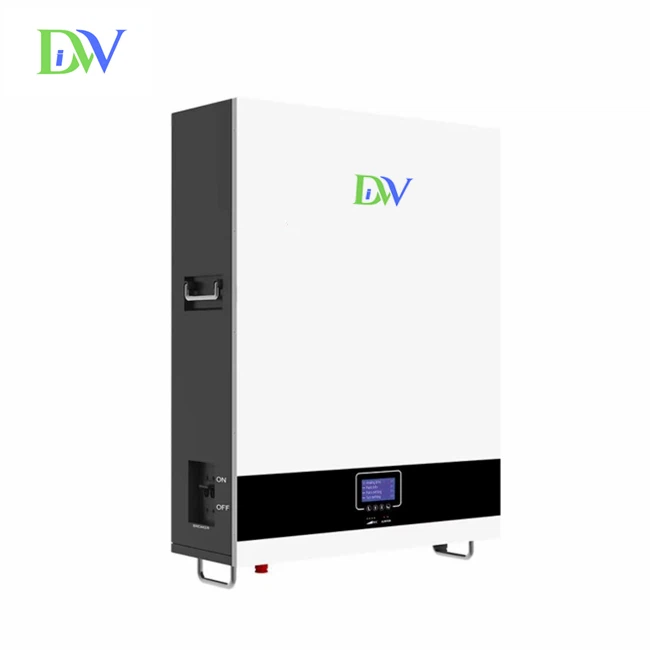
In addition to UPS backup lithium batteries, we also offer a range of other energy storage solutions, such as RV Lithium Battery, Car Start Storage Battery, and Powerwall Lithium Battery. These batteries are also designed with low internal resistance to ensure efficient performance.
If you're in the market for UPS backup lithium batteries or any of our other energy storage solutions, we'd love to hear from you. Whether you have questions about internal resistance, battery performance, or anything else, our team of experts is here to help. We can work with you to find the right battery solution for your specific needs and budget.
In conclusion, understanding the internal resistance of a UPS backup lithium battery is crucial for ensuring the efficient and reliable performance of your UPS system. By choosing a battery with low internal resistance, you can enjoy longer backup times, faster charging, and overall better performance. So, if you're looking for high-quality UPS backup lithium batteries, don't hesitate to get in touch with us. We're here to help you power your world!
References
- Linden, D., & Reddy, T. B. (2002). Handbook of Batteries. McGraw-Hill.
- Tarascon, J.-M., & Armand, M. (2001). Issues and challenges facing rechargeable lithium batteries. Nature, 414(6861), 359-367.
- Chen, Z., Cong, T. N., Yang, J., Tan, C. S., & Li, H. (2009). Progress in electrical energy storage system: A critical review. Progress in Natural Science, 19(3), 291-312.