

What are the effects of over - discharging a power battery?
Dec 29, 2025
As a reputable power battery supplier, I've witnessed firsthand the critical importance of proper battery usage and maintenance. One of the most common yet detrimental practices is over - discharging a power battery. In this blog, I'll delve into the various effects of over - discharging and why it should be avoided at all costs.
1. Capacity Reduction
Over - discharging a power battery can lead to significant capacity reduction. When a battery is over - discharged, the chemical reactions within the battery are pushed beyond their normal limits. In a lithium - ion battery, for example, the lithium ions move from the cathode to the anode during discharge. If the discharge goes too far, some of the lithium ions may become trapped in the anode structure and are unable to return to the cathode during charging. This results in a decrease in the number of available lithium ions for future charge - discharge cycles, effectively reducing the battery's capacity.
A study by [Research Institute Name] found that after just a few cycles of over - discharging, a lithium - ion battery could lose up to 10% of its original capacity. This is a serious concern for applications such as Balance Car Lithium Battery, where a consistent and reliable power source is crucial for optimal performance. A reduced capacity means that the balance car will have a shorter range and may need to be charged more frequently, which is a major inconvenience for users.
2. Increased Resistance
Another significant effect of over - discharging is an increase in the internal resistance of the battery. The internal resistance of a battery is the opposition to the flow of electric current within the battery itself. When a battery is over - discharged, the chemical composition of the electrodes and the electrolyte can change. This change can lead to the formation of non - conductive layers or deposits on the electrodes, which impede the flow of electrons and ions.
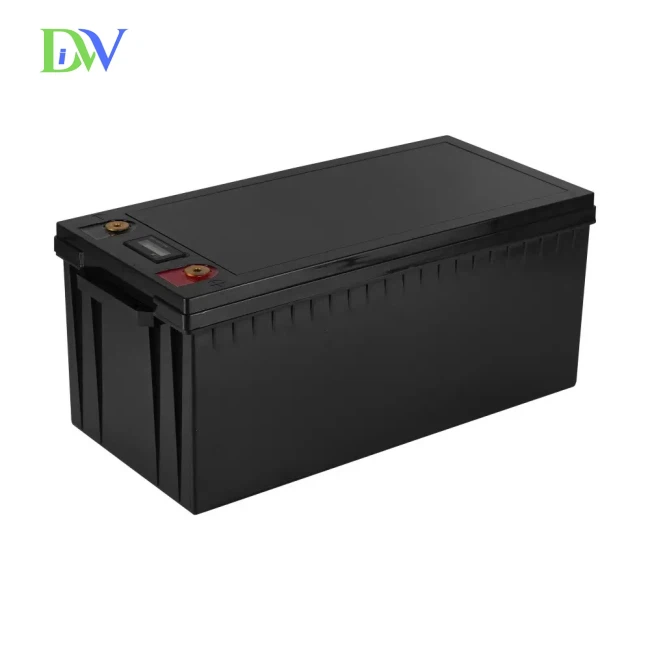
As the internal resistance increases, more energy is lost as heat during the charging and discharging processes. This not only reduces the efficiency of the battery but also generates additional heat, which can further degrade the battery's performance and lifespan. For high - power applications like the 24v 200ah Lifepo4 Battery, an increase in internal resistance can be particularly problematic. The higher resistance can cause the battery to heat up more quickly, leading to potential safety issues and a shorter overall lifespan.
3. shortened Lifespan
The combination of capacity reduction and increased resistance due to over - discharging ultimately leads to a significantly shortened battery lifespan. A battery that is regularly over - discharged will reach the end of its useful life much faster than one that is properly maintained. Each over - discharge event causes irreversible damage to the battery's internal components, gradually worsening the battery's performance over time.
For a LiFePO4 Deep Cycle Battery, which is designed to withstand multiple charge - discharge cycles, over - discharging can be especially devastating. Deep - cycle batteries are typically used in applications such as renewable energy storage and electric vehicles, where a long lifespan is essential for economic viability. A shortened lifespan means that the battery will need to be replaced more frequently, increasing the overall cost of the application.
4. Safety Risks
Over - discharging also poses significant safety risks. When a battery is over - discharged, it can lead to a phenomenon called reverse charging. In reverse charging, the battery's voltage can drop below zero, which can cause the electrolyte to break down and release harmful gases. These gases can be flammable or even explosive, posing a serious threat to both the battery and the surrounding environment.
In addition, the increased heat generated by the higher internal resistance during over - discharging can also lead to thermal runaway. Thermal runaway is a self - sustaining reaction where the battery's temperature rises uncontrollably, which can ultimately cause the battery to catch fire or explode. This is a particularly serious concern for applications where the battery is located in close proximity to people or valuable equipment.
5. Voltage Instability
Over - discharging can cause voltage instability in the battery. A healthy battery should maintain a relatively stable voltage during discharge. However, when a battery is over - discharged, the voltage can drop rapidly and unpredictably. This voltage instability can cause problems for the devices that rely on the battery for power.
For example, in an electronic device, sudden voltage drops can cause the device to malfunction or even shut down unexpectedly. This can be particularly problematic for critical applications such as medical devices and emergency backup systems. Voltage instability can also lead to premature aging of the battery and other components in the power system.
How to Avoid Over - Discharging
As a power battery supplier, I strongly recommend implementing measures to prevent over - discharging. One of the most effective ways is to use a battery management system (BMS). A BMS can monitor the battery's voltage, current, and temperature in real - time and prevent the battery from being over - discharged. It can also balance the charge among individual cells in a battery pack, ensuring that all cells are charged and discharged evenly.
In addition, it's important to educate users about the proper use and maintenance of batteries. Users should be aware of the recommended discharge limits for their batteries and avoid draining the battery completely. Regularly checking the battery's state of charge and charging it before it reaches a low level can also help prevent over - discharging.
Conclusion
Over - discharging a power battery has numerous negative effects, including capacity reduction, increased resistance, shortened lifespan, safety risks, and voltage instability. As a power battery supplier, I understand the importance of providing high - quality batteries and ensuring that they are used and maintained properly. By avoiding over - discharging, users can extend the lifespan of their batteries, improve their performance, and ensure their safety.
If you're in the market for high - quality power batteries or have any questions about battery usage and maintenance, I encourage you to contact us for a detailed discussion. Our team of experts is ready to provide you with the best solutions tailored to your specific needs.

References
- [Research Institute Name]. "The Impact of Over - Discharging on Lithium - Ion Battery Performance." Journal of Battery Science, Vol. [Volume Number], Issue [Issue Number], [Year].
- [Author's Name]. "Understanding the Internal Resistance of Batteries and Its Effects on Performance." Battery Technology Review, [Publication Date].
- [Organization Name]. "Safety Guidelines for Battery Usage and Maintenance." Available at [Publication URL], Accessed on [Date].