

How to increase the power output of a power battery?
Oct 30, 2025
In the dynamic landscape of energy storage, power batteries play a pivotal role across various industries, from electric vehicles to renewable energy systems. As a leading power battery supplier, we understand the critical importance of enhancing power output to meet the ever - growing demands of our customers. This blog post will delve into several effective strategies that can be employed to increase the power output of a power battery.
1. Electrode Material Optimization
The choice of electrode materials is fundamental in determining the power output of a battery. For lithium - ion batteries, which are widely used in many applications, the cathode and anode materials significantly influence the battery's performance.
Cathode Materials
Advanced cathode materials such as lithium nickel manganese cobalt oxide (NMC) and lithium nickel cobalt aluminum oxide (NCA) offer high energy density and excellent power capabilities. These materials have a high specific capacity, which means they can store and release more charge per unit mass. For example, NMC cathodes with a higher nickel content can provide increased power output due to their enhanced lithium - ion diffusion kinetics. Research has shown that by adjusting the composition ratio of nickel, manganese, and cobalt in NMC cathodes, we can fine - tune the battery's power and energy characteristics.
Anode Materials
Graphite is the most commonly used anode material in lithium - ion batteries. However, alternative materials like silicon - based anodes are emerging as promising candidates for increasing power output. Silicon has a much higher theoretical specific capacity than graphite, allowing for more lithium ions to be stored and transferred during charging and discharging. Although silicon anodes face challenges such as volume expansion during cycling, recent technological advancements have made it possible to mitigate these issues, making them a viable option for high - power applications.
2. Battery Design and Structure
The design and structure of a power battery also have a profound impact on its power output.
Cell Geometry
The shape and size of the battery cells can affect the internal resistance and heat dissipation, which in turn influence the power output. For instance, prismatic cells offer a larger surface - area - to - volume ratio compared to cylindrical cells, which can result in better heat dissipation and lower internal resistance. This allows for faster charging and discharging rates, thereby increasing the power output.
Stacking and Connection
The way battery cells are stacked and connected within a battery pack is crucial. Parallel connection of cells can increase the current capacity, while series connection can increase the voltage. By carefully designing the combination of parallel and series connections, we can optimize the power output of the battery pack to meet the specific requirements of different applications. For example, in an electric vehicle, a battery pack may be designed with a combination of series and parallel connections to provide the necessary voltage and current for high - power operation.
3. Electrolyte Improvement
The electrolyte is the medium through which lithium ions move between the anode and the cathode in a lithium - ion battery. Improving the electrolyte properties can enhance the power output.
Electrolyte Composition
The choice of electrolyte salts, solvents, and additives can significantly affect the ionic conductivity and stability of the electrolyte. High - conductivity electrolytes can facilitate faster lithium - ion transport, reducing the internal resistance of the battery and increasing the power output. For example, using lithium hexafluorophosphate (LiPF₆) as the electrolyte salt is common due to its good ionic conductivity and stability. Additionally, the addition of certain additives can improve the electrolyte's performance at high temperatures or under high - power conditions.
Electrolyte Filling and Distribution
Proper filling and distribution of the electrolyte within the battery cells are essential. Ensuring that the electrolyte fully penetrates the electrode materials can improve the contact between the electrolyte and the electrodes, enhancing the lithium - ion transfer efficiency. Advanced manufacturing processes are employed to achieve uniform electrolyte distribution, which is crucial for maximizing the power output of the battery.
4. Thermal Management
Temperature has a significant impact on the performance of power batteries. Effective thermal management is necessary to maintain the battery at an optimal operating temperature range, which can increase the power output.
Cooling Systems
Installing cooling systems such as liquid cooling or air cooling can help dissipate heat generated during battery operation. Liquid cooling systems are more efficient in removing heat from the battery cells, especially in high - power applications. By keeping the battery temperature within a narrow range, the internal resistance can be reduced, and the electrochemical reactions can proceed more efficiently, leading to an increase in power output.
Heating Systems
In cold environments, heating systems may be required to warm up the battery to an optimal operating temperature. Low temperatures can significantly increase the internal resistance of the battery, reducing the power output. By using heating elements or thermal blankets, the battery can be heated to a suitable temperature, allowing it to deliver the required power.
5. Battery Management System (BMS)
A sophisticated Battery Management System (BMS) is essential for optimizing the power output of a battery pack.

State of Charge (SOC) and State of Health (SOH) Monitoring
The BMS continuously monitors the State of Charge (SOC) and State of Health (SOH) of the battery cells. By accurately estimating the SOC, the BMS can ensure that the battery is neither over - charged nor over - discharged, which can damage the battery and reduce its power output. Monitoring the SOH allows for early detection of battery degradation, enabling timely maintenance or replacement of the battery cells to maintain the power output.
Charge and Discharge Control
The BMS controls the charging and discharging processes of the battery pack. It can adjust the charging current and voltage based on the battery's state and the application requirements. For example, during high - power demand situations, the BMS can allow for a higher discharge current while ensuring the battery's safety and longevity.
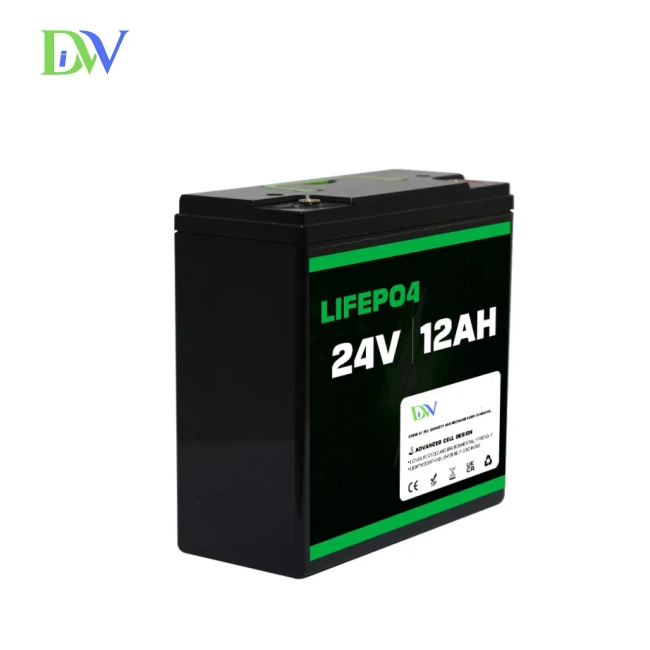
As a power battery supplier, we offer a wide range of high - quality power batteries, including 24v 50ah Lifepo4 Battery, 24v 12ah Lifepo4 Battery, and Golf Cart Lithium Battery. Our products are designed with the latest technologies and optimized for high power output.
If you are interested in our power batteries or have specific requirements for power output improvement, we invite you to contact us for procurement and further discussions. Our team of experts is ready to provide you with customized solutions to meet your energy storage needs.
References
- Arora, P., & Zhang, Z. (2004). Battery separators. Chemical Reviews, 104(10), 4419 - 4462.
- Goodenough, J. B., & Kim, Y. (2010). Challenges for rechargeable Li batteries. Chemistry of Materials, 22(3), 587 - 603.
- Winter, M., & Brodd, R. J. (2004). What are batteries, fuel cells, and supercapacitors?. Chemical Reviews, 104(10), 4245 - 4269.