

How does the age of a UPS backup lithium battery affect its performance?
Nov 07, 2025
The performance of a UPS (Uninterruptible Power Supply) backup lithium battery is a critical factor in ensuring reliable power supply during outages. As a supplier of UPS backup lithium batteries, I've witnessed firsthand how the age of these batteries can significantly impact their performance. In this blog, we'll explore the various ways in which age affects the performance of UPS backup lithium batteries.
Chemical Changes Over Time
Lithium batteries operate based on a chemical reaction that involves the movement of lithium ions between the anode and the cathode. Over time, this chemical process leads to several changes within the battery. One of the primary changes is the formation of a solid - electrolyte interphase (SEI) layer on the anode. When the battery is new, the SEI layer forms as a protective barrier, but as the battery ages, this layer can thicken. A thickened SEI layer increases the internal resistance of the battery.
Higher internal resistance means that more energy is lost as heat during the charging and discharging processes. This not only reduces the overall efficiency of the battery but also generates excess heat, which can further accelerate the aging process. For example, a new UPS backup lithium battery might have an internal resistance of around 10 - 20 milliohms, but as it ages over several years, this resistance can increase to 50 - 100 milliohms or even higher.
Capacity Degradation
One of the most noticeable effects of a battery's age is the degradation of its capacity. Capacity refers to the amount of electrical charge that a battery can store. When a lithium battery is new, it can typically hold a charge close to its rated capacity. However, as the battery goes through multiple charge - discharge cycles, the number of active lithium ions available for the electrochemical reaction decreases.
This reduction in the number of active ions is due to side reactions that occur within the battery over time. For instance, some lithium ions may become trapped in the SEI layer or react with other components in the battery, making them unavailable for the normal charge - discharge process. As a result, an aged UPS backup lithium battery may only be able to hold 70% or even less of its original capacity after several years of use.

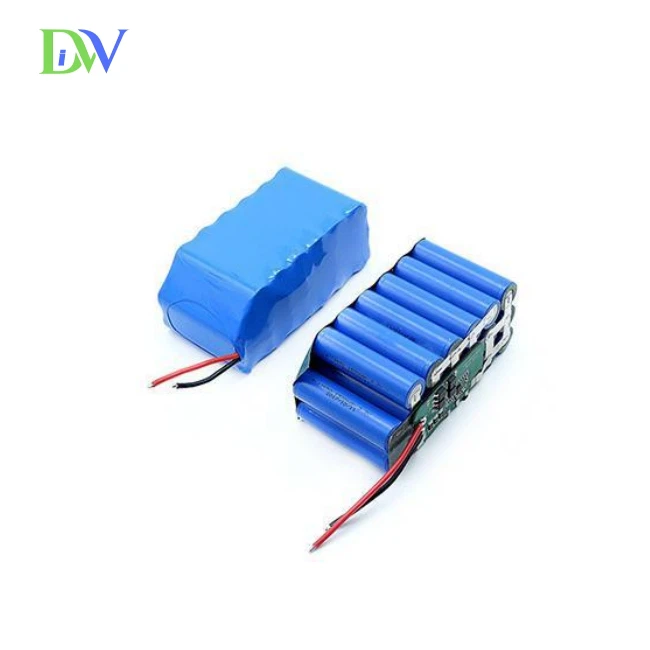
For a UPS system, a decrease in battery capacity means that it can provide power for a shorter period during an outage. If a new battery can keep a small office's critical equipment running for two hours, an aged battery with significantly degraded capacity might only be able to power the same equipment for one hour or less.
Voltage and Power Output
The voltage of a lithium battery is another important performance parameter that is affected by age. A new lithium battery typically operates within a specific voltage range. For example, a common lithium - ion battery might have a nominal voltage of 3.7V per cell. However, as the battery ages, its ability to maintain a stable voltage during discharge deteriorates.
An aged battery may experience a more rapid voltage drop during discharge compared to a new one. This can be a problem for UPS systems because many electronic devices require a stable voltage to operate properly. If the voltage drops too quickly, the UPS may not be able to supply the necessary power to keep the connected equipment running smoothly.
In addition to voltage, the power output of the battery also decreases with age. Power is the product of voltage and current. Since both the voltage and the battery's ability to deliver high - current (due to increased internal resistance) decline as the battery ages, the overall power output available from the UPS backup lithium battery is reduced.
Thermal Management Challenges
As a battery ages, it becomes more difficult to manage its temperature. The increased internal resistance mentioned earlier leads to more heat generation during charging and discharging. Newer batteries are designed with efficient thermal management systems to dissipate this heat, but as the battery ages, these systems may become less effective.
Excessive heat can further damage the battery. High temperatures can accelerate the chemical reactions that cause capacity degradation and can also lead to physical changes in the battery's components, such as the melting or deformation of the separator between the anode and the cathode. This can potentially lead to short - circuits and other safety hazards.
Impact on UPS System Reliability
The performance degradation of an aged UPS backup lithium battery directly impacts the reliability of the entire UPS system. A UPS is designed to provide a seamless transition to battery power in the event of a mains power outage. However, if the battery is old and its performance is compromised, it may not be able to deliver the required power when needed.
This can result in unexpected downtime for critical equipment, such as servers in a data center or life - support systems in a hospital. In some cases, the UPS may even fail to switch to battery power at all, leaving the connected equipment vulnerable to power disruptions.
Our Solutions as a Supplier
As a supplier of UPS backup lithium batteries, we understand the challenges posed by battery aging. We offer a range of high - quality batteries that are designed to have a longer lifespan and better performance over time. Our Solar Street Light Lithium Battery and Low Temperature Lithium Battery are engineered with advanced materials and manufacturing processes to minimize the effects of aging.
We also provide regular maintenance and monitoring services to our customers. By regularly testing the battery's capacity, voltage, and internal resistance, we can detect early signs of performance degradation and recommend appropriate actions, such as battery replacement or maintenance.
In addition, our Rack Mount Lithium Battery is designed with improved thermal management features to ensure that the battery remains within a safe temperature range even as it ages. This helps to extend the battery's lifespan and maintain its performance.
Conclusion
The age of a UPS backup lithium battery has a profound impact on its performance. From chemical changes and capacity degradation to voltage and power output issues, aging can lead to a significant reduction in the battery's ability to provide reliable power. However, as a supplier, we are committed to providing solutions that mitigate these effects.
If you're looking for high - quality UPS backup lithium batteries or need advice on battery maintenance and replacement, we're here to help. Contact us to start a discussion about your specific power - backup needs and let us find the best solution for you.
References
- Linden, D., & Reddy, T. B. (2002). Handbook of Batteries. McGraw - Hill.
- Chen, Z., & Evans, D. J. (2012). Electrochemical Power Sources: Fundamentals, Systems, and Applications. Wiley.
- Tarascon, J. M., & Armand, M. (2001). Issues and challenges facing rechargeable lithium batteries. Nature, 414(6861), 359 - 367.