

How do I check the charge level of a scooter lithium battery?
Sep 19, 2025
As a supplier of Scooter Lithium Batteries, I often receive inquiries from customers about how to check the charge level of these batteries. Understanding the battery charge level is crucial for the proper use and maintenance of electric scooters. In this blog, I'll share some practical methods to help you accurately assess the charge level of your scooter lithium battery.
1. Using the Built - in Battery Indicator
Most modern electric scooters come equipped with a built - in battery indicator. This is the simplest and most straightforward way to check the charge level. These indicators are usually located on the scooter's control panel or display screen.
The battery indicator typically consists of a series of bars or lights. Each bar or light represents a certain percentage of the battery's charge. For example, if there are five bars in total, each bar might represent approximately 20% of the charge. When all five bars are lit, the battery is fully charged. As the battery discharges during use, the bars will start to go out one by one.
However, it's important to note that the accuracy of these built - in indicators can vary. Some indicators may not provide a precise reading, especially as the battery ages. They might show a full charge even when the battery's actual capacity is reduced. In such cases, you may need to rely on other methods to get a more accurate assessment.
2. Measuring Voltage
Voltage measurement is a more technical but reliable way to determine the charge level of a scooter lithium battery. To measure the voltage, you'll need a multimeter, which is a common electrical testing tool.
First, make sure the scooter is turned off. Then, locate the battery terminals. The positive terminal is usually marked with a plus (+) sign, and the negative terminal with a minus (-) sign. Set your multimeter to the DC voltage setting. Connect the red probe of the multimeter to the positive terminal of the battery and the black probe to the negative terminal.
The voltage of a fully charged lithium - ion battery is typically around 4.2 volts per cell. For a 36 - volt battery pack, which usually consists of 10 cells connected in series, a fully charged battery should have a voltage close to 42 volts. As the battery discharges, the voltage will gradually decrease. When the voltage drops to around 30 - 32 volts for a 36 - volt battery pack, it's a sign that the battery is nearly depleted.
It's important to remember that the relationship between voltage and charge level is not linear. The voltage drops more rapidly towards the end of the discharge cycle. Also, the temperature can affect the voltage reading. In cold weather, the voltage may appear lower than it actually is, even when the battery has a decent charge.
3. Calculating Based on Usage Time
Another way to estimate the charge level is by calculating based on the scooter's usage time. This method requires you to have an understanding of the battery's capacity and the power consumption of the scooter.
If you know the capacity of your battery, for example, a 36v 10ah Lifepo4 Battery, which has a capacity of 360 watt - hours (36 volts x 10 amp - hours), and you know the average power consumption of your scooter, say 60 watts, you can calculate the approximate running time.
The theoretical running time can be calculated by dividing the battery capacity (in watt - hours) by the power consumption (in watts). In this case, 360 watt - hours divided by 60 watts gives you 6 hours of running time. By keeping track of how long you've been using the scooter, you can estimate the remaining charge.
However, this method has its limitations. The actual running time may vary depending on factors such as the terrain, rider's weight, and speed. Riding uphill or at high speeds will consume more power, reducing the actual running time compared to the theoretical calculation.
4. Using a Battery Management System (BMS)
Many modern scooter lithium batteries are equipped with a Battery Management System (BMS). The BMS is an electronic system that monitors and manages the battery's performance, including the charge level.
Some BMSs can communicate with external devices, such as a smartphone app. By connecting your scooter's battery to the app via Bluetooth or other wireless technologies, you can get real - time information about the battery's charge level, temperature, and other important parameters.
The BMS also helps protect the battery from overcharging, over - discharging, and short - circuits. It ensures the battery operates within a safe range, which is essential for the battery's longevity and performance.
5. Visual Inspection
Although not as precise as the other methods, visual inspection can still provide some clues about the battery's charge level. A healthy and fully charged lithium battery should look normal, without any signs of swelling, leakage, or damage.
If the battery appears swollen, it could be a sign of overheating or overcharging, which may also affect the charge level. Leakage is another serious issue that can indicate a damaged battery. In such cases, it's important to stop using the battery immediately and have it inspected or replaced.
Importance of Regularly Checking the Charge Level
Regularly checking the charge level of your scooter lithium battery is essential for several reasons. Firstly, it helps you plan your trips. Knowing how much charge is left in the battery allows you to determine how far you can travel without running out of power.

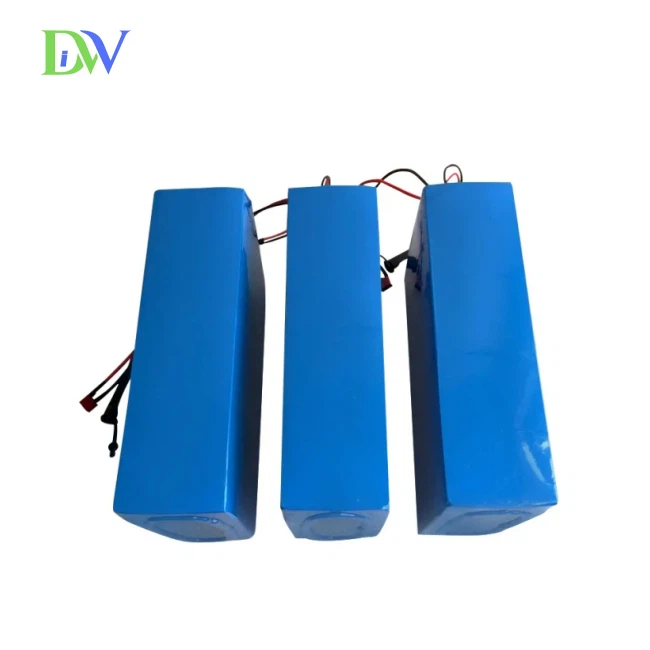
Secondly, it's crucial for the battery's health. Over - discharging a lithium battery can cause irreversible damage and reduce its lifespan. By monitoring the charge level, you can avoid over - discharging and ensure the battery is charged at the appropriate time.
Finally, it ensures your safety. A scooter with a low - charged battery may not perform as expected, especially when going uphill or at high speeds. This can pose a risk to the rider, so it's important to keep the battery at an adequate charge level.
Conclusion
Checking the charge level of a scooter lithium battery is an important part of owning an electric scooter. Whether you use the built - in indicator, measure the voltage, calculate based on usage time, rely on the BMS, or perform a visual inspection, each method has its advantages and limitations. By using a combination of these methods, you can get a more accurate understanding of your battery's charge level.
If you're in the market for high - quality Electric Two Wheeler Battery or Electric Scooters Battery, we are here to help. Our batteries are designed with the latest technology and high - quality materials to ensure long - lasting performance and safety. If you have any questions or are interested in purchasing our products, please feel free to reach out to us for further discussion and negotiation.
References
- Battery University. "How to Prolong Lithium - based Batteries."
- Scooter Manufacturer's Manuals.