

Can AGV lithium batteries be connected in series or parallel?
Aug 28, 2025
Can AGV lithium batteries be connected in series or parallel? This is a question that often arises among those involved in the field of Automated Guided Vehicles (AGVs). As a leading AGV lithium battery supplier, I am well - versed in the technicalities and practicalities of battery connections, and I'm here to provide a comprehensive answer.
Understanding AGV Lithium Batteries
Before delving into the series and parallel connections, it's essential to understand the nature of AGV lithium batteries. Lithium batteries are favored in AGVs due to their high energy density, long cycle life, and relatively low self - discharge rate. These features make them ideal for powering AGVs, which require reliable and efficient energy sources to operate continuously in industrial settings.
Series Connection of AGV Lithium Batteries
When it comes to series connection, the positive terminal of one battery is connected to the negative terminal of another. The primary advantage of connecting AGV lithium batteries in series is the increase in voltage. For example, if you have two 12 - volt AGV lithium batteries and connect them in series, the resulting voltage will be 24 volts. This is useful when the AGV's electrical system requires a higher voltage to operate certain components, such as motors or controllers.
However, there are some considerations when connecting AGV lithium batteries in series. First, all the batteries in the series must have the same capacity and state of charge. If there is a significant difference in capacity or state of charge between the batteries, it can lead to uneven charging and discharging. This unevenness can cause some batteries to overcharge or over - discharge, which not only reduces the overall lifespan of the battery pack but also poses a safety risk.
Moreover, the series connection requires careful monitoring. A battery management system (BMS) is crucial to ensure that each battery in the series is operating within its safe limits. The BMS can detect any abnormal voltage or temperature changes in individual batteries and take appropriate actions, such as disconnecting the faulty battery or adjusting the charging current.
Parallel Connection of AGV Lithium Batteries
Parallel connection involves connecting the positive terminals of all batteries together and the negative terminals together. The main benefit of parallel connection is the increase in capacity. For instance, if you connect two 100 - ampere - hour AGV lithium batteries in parallel, the resulting capacity will be 200 ampere - hours. This is beneficial when the AGV needs to operate for a longer period without recharging.
Similar to series connection, parallel connection also has its own set of requirements. All the batteries in the parallel configuration should have the same voltage and internal resistance. A difference in voltage can cause current to flow between the batteries, leading to imbalances. Over time, this can result in premature battery failure.
Just like in series connection, a BMS is also necessary for parallel - connected AGV lithium batteries. The BMS can help balance the current flow among the batteries and prevent over - charging or over - discharging.
Safety and Compatibility
Safety is of utmost importance when connecting AGV lithium batteries in series or parallel. Lithium batteries are sensitive to over - charging, over - discharging, and short - circuits. Any of these conditions can lead to thermal runaway, which is a dangerous situation where the battery heats up uncontrollably and may even catch fire or explode.

In addition to safety, compatibility with the AGV's electrical system is crucial. The AGV's motor, controller, and other components are designed to work within specific voltage and current ranges. Therefore, when considering series or parallel connections, it's essential to ensure that the resulting battery pack meets the electrical requirements of the AGV.
Real - World Applications
In real - world AGV applications, both series and parallel connections are commonly used. For example, in large - scale manufacturing plants, AGVs may require a higher voltage to power their motors for faster and more efficient operation. In such cases, series - connected battery packs are often used. On the other hand, in warehouses where AGVs need to operate for long shifts without frequent recharging, parallel - connected battery packs are more suitable.
Other Related Lithium Batteries
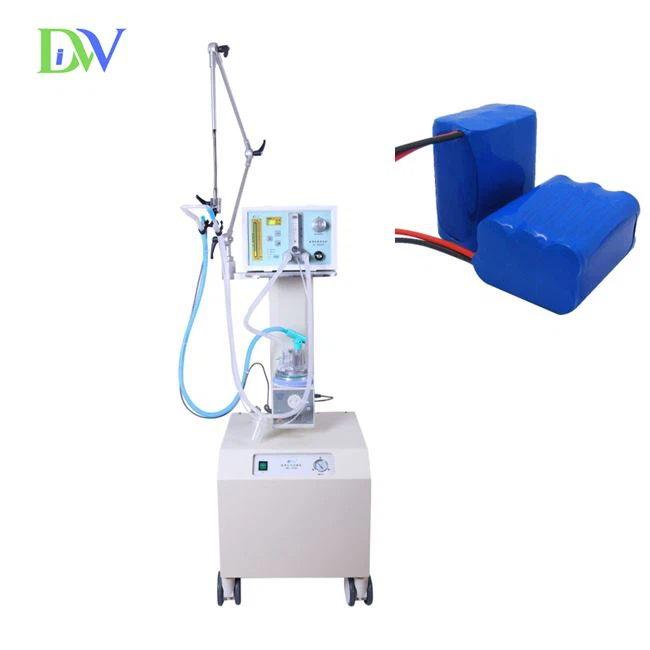
As an AGV lithium battery supplier, we also offer a range of other industrial lithium batteries. For instance, we have Ventilator Lithium Battery, which is designed to provide reliable power for ventilators in medical and industrial settings. Our Water Pump Lithium Battery is suitable for powering water pumps in various applications. And our Industrial Equipment Lifepo4 Battery is a popular choice for a wide range of industrial equipment due to its high performance and long lifespan.
Conclusion
In conclusion, AGV lithium batteries can indeed be connected in series or parallel, but each method has its own advantages, disadvantages, and requirements. Whether you choose series or parallel connection depends on the specific needs of your AGV, such as voltage requirements, capacity needs, and operating time. As a professional AGV lithium battery supplier, we have the expertise and experience to help you make the right decision.
If you are in the market for high - quality AGV lithium batteries or need advice on battery connections, please feel free to contact us for a detailed discussion. We are committed to providing you with the best solutions for your AGV power needs.
References
- Linden, D., & Reddy, T. B. (2002). Handbook of Batteries. McGraw - Hill.
- Chen, Z., & Evans, D. J. (2012). Lithium - ion Batteries: Science and Technologies. Springer.